
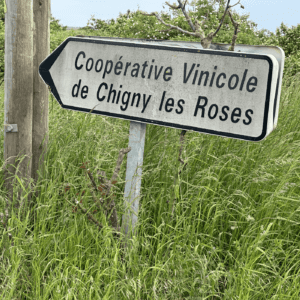
The cooperative of Chigny les Roses, Montagne de Reims, FR
The Green Revolution in Wine
The Champagne region is 35,000 hectares of vines that make the world’s most famous sparkling wine. Even though the number of organic growers in the region is still quite small, there seems to have been a wake-up call not only among independent producers, but also with the major houses or groups. As a matter of fact, even if only less than 5% of vineyards are used for organic farming, between 2012 and 2017 alone, 37% of the Champagne estate were awarded organic certification.
The means are in place to encourage Champagne growers to switch to organic. 20 million euros have been invested in the creation of a research center looking at sustainable farming in Champagne. What’s more, university programmes specializing in soil and life science and have also been set up with the aim of boosting innovation, knowledge sharing, and also organic farming techniques. In 2014, the specifications were put in place in Champagne to ensure controls for sustainable winegrowing. Using these specifications, the aim is to achieve full conversion of Champagne between now and 2030.
Late conversion to organic
Compared to other varieties of wine in France, Champagne has shown some delay in moving over to organic growing. If fewer than 5% of growers are organic, then biodynamic growing is even more unusual, since it represents less than 1% of the wine produced. With the arrival of a new generation to head up the great champagne estates, it has been possible to note a move towards greater awareness. Young growers are first and foremost aware of environmental issues, and more and more focused on the importance of sustainable farming when it comes to guaranteeing a prosperous future of great quality.